
Beaches in Phuket
09:17
Hat Karon (Karon Beach)
Located south of Patong Beach, Hat Karon is a curving beach that lies beautifully in the sun with small sand dunes, casuarinas and palm trees. The crescent bay is the beach's signature that drawing travelers attention. From May to October, the beach may by affected by serious undertows, as the bay open. Watch out for those warning flags before going swimming or surfing at the southern end of the beach. During the high season, the beach is ideal for relaxation, swimming or sunbathing. A wide range of accommodations, from top-end to budget and mid-range, are available. Other facilities such as nightclubs, restaurants and other evening entertainment are located along the beachfront road.
Hat Kata (Kata Beach)
Located approximately 17 kilometers from Phuket City are Kata Noi (Small Kata) Beaches. Both are renowned for snorkeling to se the coral, tropical fishes and the seas eco-system. Also worth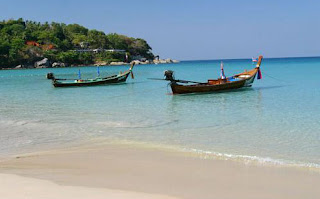 visiting is Kho Pu, a small uninhabited island located off Laem Sai. Most visitors find snorkeling along the islands rich coral reef enjoyable. Diverse beach activities are available on both beaches. Accommodations on Hat Kata are set amidst tropical are cliff settings. Visitors can choose to stay in budget to top end accommodations according to their preference. Well known hotels located here are Club Med and the Boathouse. For more information on how to get there, please refer to the transportation section in Hat Karon.
Hat Kalim (Kalim Beach)
Located north of Patong Beach is a secluded beach dotted with rocks and coral reefs. Accommodations and restaurants are available. Another interesting stopover is Freedom Beach which is located around the head of Laem Ka Sai Rot and is accessible by a chartered long-tailed boat.
Hat Kamala (Kamala Beach)
Located approximately 26 kilometers from Phuket City, Hat Kamala is a relatively secluded 2-kilometer beach that is suitable for total relaxation. Accommodations are available.
 Hat Patong (Patong Beach)
This Beach is a most developed, most vibrant, most visited beach of Phuket that never fails to impress visitors. Located approximately 15 kilometers from the City, the beach has a wide range of accommodations and shopping arcades, and provides magnificent leisure activities and energetic night-time entertainment. It is a picture perfect postcard view of a 3-kilometer long white sandy beach that is perfect for swimming,lazing, and enjoying challenging water sports such as jet skiing, windsurfing snorkeling, sailing, and parasailing.
In addition, Patong offers gastronomical delights for seafood lovers. There are plenty of good restaurants located along the beach.
Hat Nai Han (Nai Han Beach)
Located a few kilometers from Kata Beach, next to Phromthep Cape, approximately 18 kilometers from town is Hat Nai Han, an extra-ordinary beach that has white powdery sand and crystal clear water. The beach borders on two charming landscaped lagoons surrounded by rubber trees and other tropical plants. As the beach has not yet been fully developed to its full potential, it is less crowded, more peaceful, thus is ideal for people seeking solitude. Holidaymakers are not recommended to swim during the monsoon season from May to October. Watch out for the red flag!
Despite having a rather limited selection of accommodations, they range from budget bungolows to the top-class Yacht Club. Check with the TAT phuket Office for more up-to-date information and room rates.
This beach can be reached by songthaeos, which leaves from the intersection of Ranong Road and the fountain circle. The fare is 25 baht/person/trip. In addition, visitors can also charter tuk-tuks which costs a lot more at 150 baht to 200 baht/trip.
Hat Rawai (Rawai Beach)
Located approximately 17 kilometers from town is the less crowded, more peaceful and less commercial beach with a second-to-none pristine beach. The Beach is home to well-established community of Phuket Chao Le people (sea gypsies). In addition, from this beach visitors can charter boats to explore other offshore islands. Hat Laem Kha, located to the northeast of the beach, is the departure point for those wishing to visit Koh Lon, and Koh He, Laem Phromthep, Phukets landmark, is located at the southern end of the beach. This cape is an ideal spot for diving and snorkeling. Accommodations range from budget bungalows to middle range resorts.
Getting to the Beach is easy by songthaeos, which cost approximately 20 baht/person/trip. Songthaeos depart from the stop at the circle for Ranong Road, while chartered tuk-tuks will cost more at 150 baht/trip.
Hat Surin (Surin Beach) Located approximately 24 kilometers from town and only in a short distance north of Laem Sing is an enchanting beach lined with casuarinas trees. Isolated and secluded, the beach is ideal for sunbathing and relaxing. The Beach, however, is not suitable for swimming as it has a steep sloping beach and the weather fluctuates during the southwest monsoon. In addition, there is a golf course which was established in the reign of King Rama VII.
Several Muslim fishing communities are located nearby and Mosques are situated to the west of the beach. The local Mosque, Matsayit Mukaram, is worth visiting as it is an elegant whitewashed structure with lacquered wooden doors.
To get there, travel along Route No. 402, after reaching the Two Heroines Monument, turn left and proceed for approximately 12 kilometers.
Located south of Patong Beach, Hat Karon is a curving beach that lies beautifully in the sun with small sand dunes, casuarinas and palm trees. The crescent bay is the beach's signature that
 drawing travelers attention. From May to October, the beach may by affected by serious undertows, as the bay open. Watch out for those warning flags before going swimming or surfing at the southern end of the beach. During the high season, the beach is ideal for relaxation, swimming or sunbathing. A wide range of accommodations, from top-end to budget and mid-range, are available. Other facilities such as nightclubs, restaurants and other evening entertainment are located along the beachfront road.
Hat Kata (Kata Beach)
Located approximately 17 kilometers from Phuket City are Kata Noi (Small Kata) Beaches. Both are renowned for snorkeling to se the coral, tropical fishes and the seas eco-system. Also worth
 visiting is Kho Pu, a small uninhabited island located off Laem Sai. Most visitors find snorkeling along the islands rich coral reef enjoyable. Diverse beach activities are available on both beaches. Accommodations on Hat Kata are set amidst tropical are cliff settings. Visitors can choose to stay in budget to top end accommodations according to their preference. Well known hotels located here are Club Med and the Boathouse. For more information on how to get there, please refer to the transportation section in Hat Karon.
Hat Kalim (Kalim Beach)
Located north of Patong Beach is a secluded beach dotted with rocks and coral reefs. Accommodations and restaurants are available. Another interesting stopover is Freedom Beach which is located around the head of Laem Ka Sai Rot and is accessible by a chartered long-tailed boat.
Hat Kamala (Kamala Beach)
Located approximately 26 kilometers from Phuket City, Hat Kamala is a relatively secluded 2-kilometer beach that is suitable for total relaxation. Accommodations are available.
 Hat Patong (Patong Beach)
This Beach is a most developed, most vibrant, most visited beach of Phuket that never fails to impress visitors. Located approximately 15 kilometers from the City, the beach has a wide range of accommodations and shopping arcades, and provides magnificent leisure activities and energetic night-time entertainment. It is a picture perfect postcard view of a 3-kilometer long white sandy beach that is perfect for swimming,lazing, and enjoying challenging water sports such as jet skiing, windsurfing snorkeling, sailing, and parasailing.
In addition, Patong offers gastronomical delights for seafood lovers. There are plenty of good restaurants located along the beach.
Hat Nai Han (Nai Han Beach)
Located a few kilometers from Kata Beach, next to Phromthep Cape, approximately 18 kilometers from town is Hat Nai Han, an extra-ordinary beach that has white powdery sand and crystal clear water. The beach borders on two charming landscaped lagoons surrounded by rubber trees and other tropical plants. As the beach has not yet been fully developed to its full potential, it is less crowded, more peaceful, thus is ideal for people seeking solitude. Holidaymakers are not recommended to swim during the monsoon season from May to October. Watch out for the red flag!
Despite having a rather limited selection of accommodations, they range from budget bungolows to the top-class Yacht Club. Check with the TAT phuket Office for more up-to-date information and room rates.
This beach can be reached by songthaeos, which leaves from the intersection of Ranong Road and the fountain circle. The fare is 25 baht/person/trip. In addition, visitors can also charter tuk-tuks which costs a lot more at 150 baht to 200 baht/trip.
Hat Rawai (Rawai Beach)
Located approximately 17 kilometers from town is the less crowded, more peaceful and less
 commercial beach with a second-to-none pristine beach. The Beach is home to well-established community of Phuket Chao Le people (sea gypsies). In addition, from this beach visitors can charter boats to explore other offshore islands. Hat Laem Kha, located to the northeast of the beach, is the departure point for those wishing to visit Koh Lon, and Koh He, Laem Phromthep, Phukets landmark, is located at the southern end of the beach. This cape is an ideal spot for diving and snorkeling. Accommodations range from budget bungalows to middle range resorts.
Getting to the Beach is easy by songthaeos, which cost approximately 20 baht/person/trip. Songthaeos depart from the stop at the circle for Ranong Road, while chartered tuk-tuks will cost more at 150 baht/trip.
Hat Surin (Surin Beach) Located approximately 24 kilometers from town and only in a short distance north of Laem Sing is an enchanting beach lined with casuarinas trees. Isolated and secluded, the beach is ideal for sunbathing and relaxing. The Beach, however, is not suitable for swimming as it has a steep sloping beach and the weather fluctuates during the southwest monsoon. In addition, there is a golf course which was established in the reign of King Rama VII.
Several Muslim fishing communities are located nearby and Mosques are situated to the west of the beach. The local Mosque, Matsayit Mukaram, is worth visiting as it is an elegant whitewashed structure with lacquered wooden doors.
To get there, travel along Route No. 402, after reaching the Two Heroines Monument, turn left and proceed for approximately 12 kilometers.


